

Ask any groom what he wishes he’d known before shopping for his wedding outfit, and you’ll hear the same thing: “I should’ve started earlier.” The sherwani is the one piece of clothing you’ll be photographed in a thousand times, so it’s worth getting right. And this year, grooms are getting a lot more adventurous with it. Here’s what’s showing up in boutiques and on actual wedding stages in 2026.
Colours are getting softer
Maroon and gold aren’t going anywhere, but they’re no longer the default. Ivory, sage, dusty blue, champagne and a washed-out pink are everywhere right now. They look great in daylight, which matters because so many weddings now have a daytime ceremony and a photographer who loves natural light.
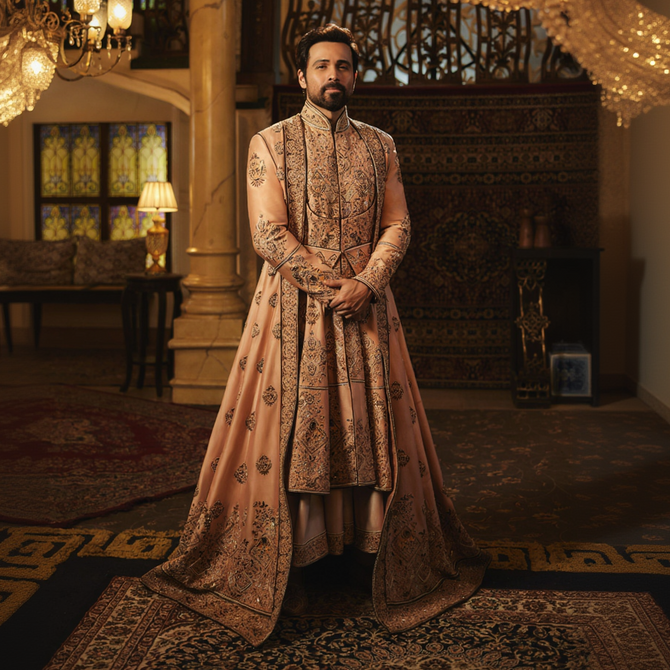
If you’re hunting for a designer sherwani for men that doesn’t scream “traditional,” a pastel is the easiest place to start. Keep the embroidery in the same shade as the fabric and you get something calm and polished.
But evenings still want drama
Reception nights are a different story. Emerald, midnight navy, deep wine and dark teal are the favourites, mostly because they look rich under warm lights without needing heavy decoration. One strong colour, a bit of antique gold, and you’re done. Resist the urge to add more.
Less zari, more restraint
Remember those sherwanis so heavily worked that grooms could barely sit down? That’s fading. A designer sherwani in 2026 usually has lighter thread work, a bordered neckline, maybe a few scattered motifs. Tone-on-tone patterns are big too. From across the room the outfit looks plain, but up close you see all the detail. It’s also just more practical. You’ll be standing, dancing, hugging relatives and posing for hours. A lighter garment makes a real difference by hour six.
Pick fabric for the month, not just the look
This one gets overlooked. Velvet looks stunning in December and miserable in May. For winter weddings, velvet, brocade and heavier silks feel right. For summer or beach events, go for silk blends, cotton-silk or fine linen mixes that let you breathe. When you’re choosing a designer wedding sherwani, ask to touch the fabric and, if you can, wear it for a few minutes. Itchy lining is something you only notice after you’ve paid for it.
Capes, jackets and layers
Layering is probably the most visible trend this season. A detachable cape over a plain sherwani gives you a proper entrance for the baraat or stage walk, and you can drop it afterwards when you want to move freely. Sleeveless overlays and embroidered jackets work the same way. Some grooms are also going for shorter, jacket-style sherwanis with a cleaner line. They look sharper in photos and feel less formal, which suits a lot of younger couples.
Fit matters more than anything
You can spend a fortune on fabric and still look off if the shoulders don’t sit right. The trend is toward slimmer, structured cuts, with bandhgala-style collars, slightly cropped lengths and the occasional asymmetric closure.
If you’re picking a designer sherwani for groom duties, plan for at least two fittings. Most tailors will tell you the second one is where the real adjustments happen. Don’t skip it because you’re busy with a hundred other wedding tasks.
Indo-western fusion
Plenty of weddings now stretch across several days, sometimes across cultures. That’s why fusion has become a serious part of designer menswear. Think tuxedo-style lapels on a sherwani, a waistcoat under a long jacket, or a structured blazer worn over a kurta set. It lets you switch between a mehendi, a church ceremony and a reception without feeling overdressed or underdressed.
Small personal details
This is my favourite trend, honestly. Grooms are asking for their initials stitched inside the collar, the wedding date embroidered near the cuff, or a lining printed with something that means something to them. One groom reportedly used a piece of his grandfather’s old shawl as trim.
Nobody else will necessarily notice. That’s the point. You will.
Handmade and conscious choices
Handwoven textiles, natural dyes and hand embroidery are getting more attention. They tend to cost more, but the finish is different and you’re supporting the artisans who make them. It’s fair to ask any designer where the fabric comes from and who did the work. Good ones are happy to tell you.
Accessories
Layered pearl strands, brooches, a stole, a pocket square, handcrafted mojaris. A turban or safa still works beautifully, though some grooms skip headwear altogether now. One rule that rarely fails: if the sherwani is busy, keep the accessories quiet. If the sherwani is plain, that’s your chance to add something bold.
A few questions before you buy
- Where’s the wedding, and what month is it?
- What cuts actually suit your build?
- Does it feel like you, or just like something you saw online?
- How much time is left? Custom work can take six weeks or more.
If you can, try things on in person. Colours behave differently against different skin tones, and no photo shows you that. When you’re browsing sherwani for men, check the stitching on the inside, the lining and the finishing. Those are the places where cheap work shows.
Final thoughts
Trends are useful for ideas, but the sherwani you’ll love in your photos twenty years from now is the one that fits well and feels like you. Choose something you can sit, dance and breathe in.
If you want to look around for inspiration, Bharat Reshma is one of several places worth browsing to see how fabrics, cuts and embroidery come together. Visit a few designers, compare, take your time. Then start early, ask plenty of questions, and pick the details that mean something to you.
